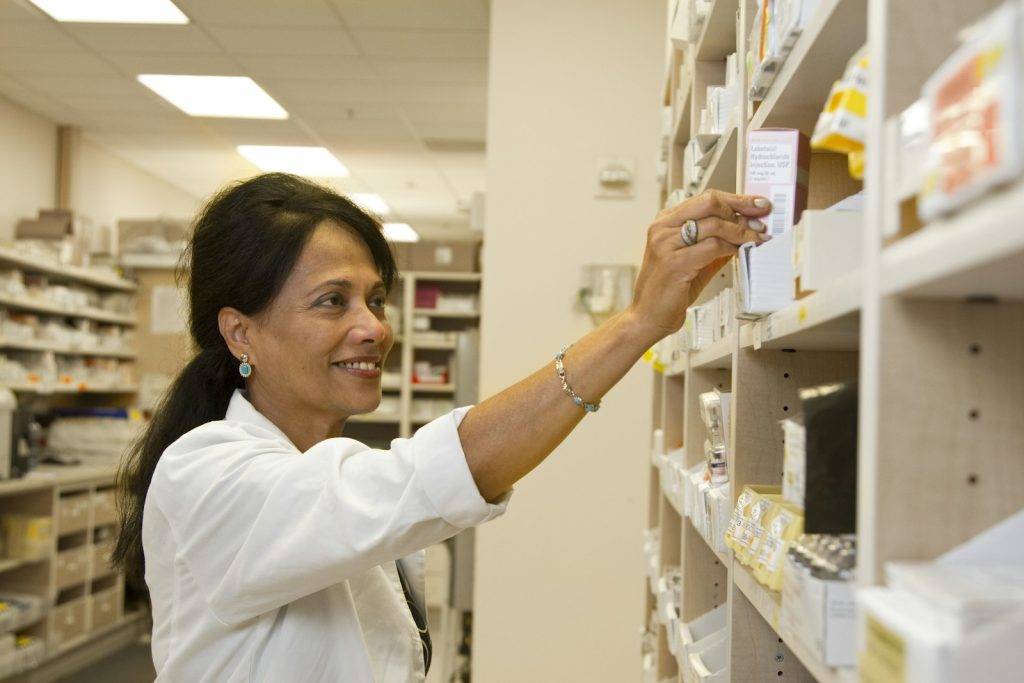
Sweden needs pharmacists, and pharmacies here have recruited from abroad for years. The route in, however, depends almost entirely on one thing: whether your degree comes from inside or outside the EU and EEA. The two paths differ in length, cost and difficulty, and mixing them up is the most common reason applicants lose months.
If your degree is from the EU or EEA
This is the shorter route. According to Socialstyrelsen, the National Board of Health and Welfare, you apply directly for a Swedish licence and there is no mandatory proficiency test.
What you need to submit:
- Your diploma from an EU or EEA institution.
- A certificate, not older than three months, showing that you are not prohibited from practising your profession.
- A Certificate of Conformity confirming that your education complies with EU Directive 2005/36/EC.
- Documentation of your language proficiency.
- A copy of valid identification, and name change documents if relevant.
- Proof of payment of the application fee, which is SEK 990.
Socialstyrelsen states that its goal is to begin processing within four weeks, and that the EU directive requires a decision within three to four months for a complete application. Criminal record checks can extend that. If your decision comes with compensatory measures, you complete an aptitude test or an adaptation period before the licence is issued.
The language requirement is stricter than most expect
You must demonstrate proficiency in Swedish, Danish or Norwegian at level C1 of the Common European Framework of Reference for Languages. This applies to Nordic citizens as well, so a shared border does not exempt anyone.
C1 is an advanced level. In practice this is the step that determines your timeline, not the paperwork. Acceptable evidence includes formal qualifications, an employer assessment or a certificate of eligibility for university entry.
Plan the language first and the application second. Candidates who submit everything else and then start Swedish courses are the ones who wait longest.
If your degree is from outside the EU and EEA
This route is longer and has two alternatives.
The Socialstyrelsen route. You begin by having your education assessed as a basis for licensure. Programmes shorter than four years are not considered comparable in length to the Swedish pharmacy degree, which is worth checking before you pay any fee. After the assessment you take a proficiency test with a theoretical and a practical part, and you must pass the theoretical part before you may sit the practical one. Then follow six months of practical service, a 7.5 credit course in Swedish pharmaceutical legislation, and documented Swedish at the required level.
The complementary education route. Swedish universities offer supplementary programmes for pharmacists with foreign degrees, in Gothenburg over about 1.5 years including a language term, and in Uppsala over one to 1.5 years with or without a language term. For many applicants this is the more predictable path, because the language training, the theory and the practice are built into one programme.
A realistic timeline
- EU or EEA degree, Swedish already at C1: months, not years. The directive puts the decision within three to four months of a complete application.
- EU or EEA degree, no Swedish yet: the language stage dominates. Budget for a year or more of study before the rest becomes relevant.
- Degree from outside the EU and EEA: plan in years. Assessment, tests, six months of practical service and a legislation course add up even when nothing goes wrong.
Five things to do first
- Check the length of your programme. Under four years is a known obstacle on the non-EU route.
- Order documents early. The certificate showing you are not prohibited from practising expires after three months, so request it when the rest of the file is ready, not before.
- Decide which route you are on before paying anything. The requirements differ completely.
- Start Swedish immediately. Every route ends at the same language gate.
- Verify current fees and requirements with Socialstyrelsen. Fees and processing times change, and only the authority’s own pages are authoritative.
One encouraging note: pharmacies in Sweden actively recruit internationally, and pharmacists trained outside the EU are a recognised part of the workforce. The bottleneck is the licensing process, not the demand.
Last fact-checked: 1 August 2026